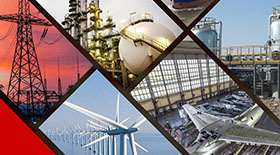
S355MC straight seam steel pipe, as a high-strength low-alloy structural steel material, has wide applications in the industrial field. This steel pipe, with its excellent mechanical properties, good weldability, and formability, has become one of the preferred materials in construction, machinery manufacturing, bridge engineering, and other fields.
From a material properties perspective, S355MC belongs to the high-strength microalloy steel specified in European standard EN 10149-2, and its chemical composition is carefully designed. The carbon content is controlled at a low level (usually not exceeding 0.12%), while microalloying elements such as niobium, titanium, and vanadium are added, significantly improving the strength of the steel through fine-grain strengthening and precipitation strengthening mechanisms. The manganese content is between 0.70-1.50%, which helps improve hardenability and strength. The content of harmful elements such as sulfur and phosphorus is strictly controlled to ensure good toughness and weldability. Typical mechanical properties of S355MC are: yield strength ≥355MPa, tensile strength 430-550MPa, and elongation ≥18%. This excellent balance of strength and toughness enables it to withstand complex stress states and dynamic loads.
In terms of manufacturing process, S355MC straight seam steel pipes are mainly manufactured using high-frequency resistance welding (ERW). This process first involves uncoiling and leveling the hot-rolled steel coil, then gradually bending the strip into a tubular shape using a forming unit. Precise control of the forming angle and pressure is crucial during the forming process, directly affecting weld quality and the geometric accuracy of the steel pipe. High-frequency current (100-400kHz) is introduced through contact electrodes, generating a skin effect at the strip edge, rapidly heating the metal to the welding temperature (approximately 1350-1400℃), achieving solid-state welding under the pressure of the extrusion rollers. Compared to traditional arc welding, the ERW process offers advantages such as high speed (up to 60m/min), narrow heat-affected zone, and stable weld quality. Post-weld heat treatment, such as normalizing or annealing, is typically required to eliminate residual welding stress and improve microstructure uniformity. The finishing process includes sizing, straightening, eddy current/ultrasonic testing, and hydrostatic testing to ensure the steel pipes meet stringent dimensional tolerances and mechanical performance requirements.
In terms of applications, S355MC straight seam steel pipes demonstrate excellent adaptability. In construction engineering, they are widely used as load-bearing components in large-span buildings such as steel structure factories and stadiums. Their high strength allows for lighter structural designs, reducing foundation costs. In the engineering machinery field, key components such as booms and chassis made from this material can withstand alternating loads and impact loads. The automotive manufacturing industry utilizes its excellent cold-formability to process chassis parts and safety components. Particularly noteworthy is its application in the new energy field—wind turbine tower manufacturing. The excellent low-temperature toughness and fatigue performance of S355MC straight seam steel pipes (impact energy can still reach over 27J at -40℃) make them an ideal choice for wind power projects in high-altitude and cold regions. According to actual cases, wind turbine towers using S355MC straight seam steel pipes can reduce weight by 15-20% compared to traditional structures, significantly reducing transportation and installation costs.
A robust quality control system is crucial for the production of S355MC straight seam welded steel pipes. Modern production lines are equipped with advanced online inspection equipment, such as laser diameter gauges to monitor the outer diameter and ovality of the pipes in real time, and X-ray industrial television to perform 100% inspection of the welds, ensuring the absence of defects such as incomplete penetration and slag inclusions. Mechanical property testing, in addition to conventional tensile and bending tests, includes Charpy V-notch impact testing to verify low-temperature toughness. Metallographic inspection focuses on the grain size and second-phase precipitation in the weld heat-affected zone. Manufacturers typically obtain ISO 3834 welding quality system certification and EN 10204 3.1/3.2 material certificates; some high-end products also require compliance with more stringent standards such as API 5L or EN 10219. Notably, to adapt to different corrosive environments, S355MC can undergo surface treatments such as hot-dip galvanizing or epoxy coating, extending its service life to over 25 years.
From a market development perspective, the S355MC straight seam welded steel pipe industry is facing significant opportunities and challenges. Global infrastructure development and energy structure transformation are driving demand growth, with the market size projected to reach $8.5 billion by 2025, representing a CAGR of approximately 4.5%. As the largest producer, China possesses a complete industrial chain advantage, and large domestic enterprises are already capable of stably producing high-end products with wall thicknesses up to 25mm. However, it also faces the dual pressures of rising trade protectionism and green production requirements. Future technological development directions include: developing higher-strength varieties (such as S500MC) to meet lightweighting needs; optimizing welding processes to reduce energy consumption (currently, electricity consumption per ton of steel is approximately 350kWh); and exploring hydrogen metallurgy pathways to reduce carbon footprint. Intelligent manufacturing is also a significant trend, using digital twin technology to achieve real-time optimization of process parameters and control product defect rates below 0.3%.
In terms of selection and use, engineers need to comprehensively consider multiple factors. Wall thickness selection should be determined through stress calculations, while also considering corrosion allowance (generally increasing by 1-2mm). Welding is the preferred connection method, and low-hydrogen welding rods such as E7018 are recommended, with preheating temperatures controlled at 100-150℃. During cold bending, the bending radius should not be less than three times the pipe diameter to avoid orange peel corrosion. During storage, avoid contact with materials with high chloride ion content (such as sea sand) to prevent pitting corrosion. Regular maintenance is recommended, with a comprehensive inspection every three years, focusing on stress concentration areas such as welds and openings to monitor microcrack propagation.
In summary, S355MC straight seam steel pipe, as a crucial basic material for modern industry, has achieved a high level of technological maturity and market acceptance. In future development, the industry needs to continuously promote product upgrades, process innovation, and service value-added services to maintain a leading position in fierce international competition. For end users, reasonable selection, standardized construction, and scientific maintenance are key to fully utilizing the material's performance, requiring close collaboration between manufacturers, design units, and construction parties. With the continuous emergence of new materials and processes, S355MC straight seam steel pipe will undoubtedly demonstrate its value in a wider range of fields.

 English
 Español
 Português
 Français
 русский язык