 English
 Español
 Português
 Français
 русский язык

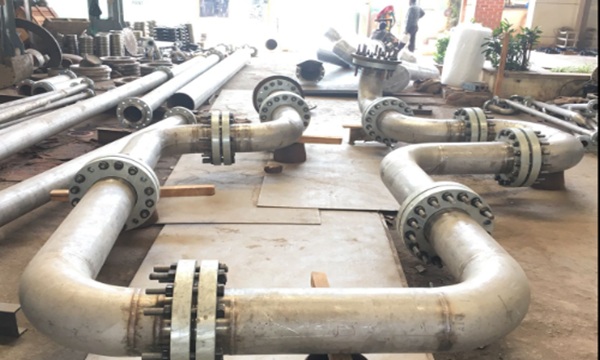
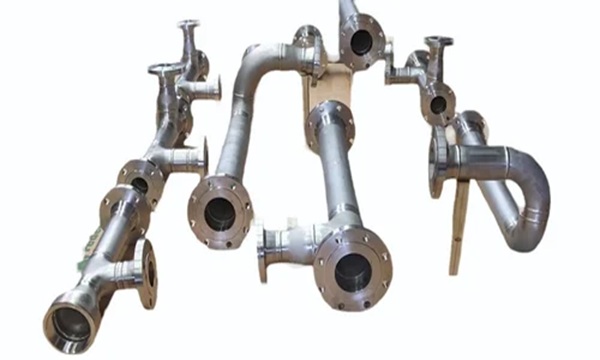
| Products | Prefabricated Pipe Spools & Modular Piping Assemblies |
| Fabrication Method | Factory-based standardized fabrication |
| Core Fabrication Processes | Cutting, beveling, fit-up, welding (ASME Section IX compliant), full-scope NDT, pressure testing, surface coating, packaging |
| Installation Method | Delivered as pre-assembled pipe spools for direct installation with minimal field welding |
| Typical Industries | Petrochemical, power generation, offshore engineering, pharmaceutical, food processing, municipal water treatment, marine, renewable energy |
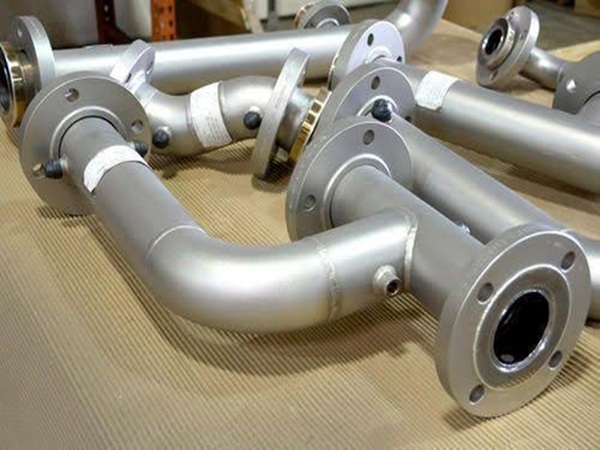
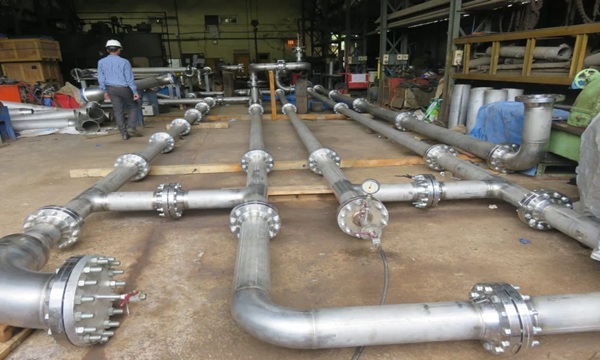
A prefabricated pipe system consists of a network of pipe spools, fittings, flanges, and valves that are cut, welded, and assembled in a fabrication shop before being transported to the project site. Each assembly is constructed in accordance with rigorous engineering specifications, incorporating dimensional drawings, material grades, and pressure ratings, and is subject to rigorous quality inspection prior to departure from the facility.
This approach contrasts with stick-built or field-fabricated piping, where raw materials are delivered to the job site and assembled on site. Off-site fabrication eliminates many of the variables that drive up cost and slow down traditional field work, including weather delays, congested work areas, inconsistent welder access, and compressed inspection windows.
The result is a pipe assembly system that has been engineered and tested in advance of installation, thereby reducing the unknowns that can disrupt industrial construction schedules.
The oil and gas industry relies on fabricated pipe assemblies built to API and ASME B31.3 process piping standards for various components, including upstream wellsite skids, midstream gathering and compression facilities, and downstream refinery piping.
Water and Wastewater Treatment
Municipal and industrial water treatment plants utilize prefabricated carbon steel, stainless steel, and FRP pipe systems for filtration, chemical dosing, and distribution headers. Shop fabrication simplifies work in confined mechanical rooms.
Chemical and Petrochemical Processing
In the face of corrosive, high-temperature, and high-pressure service conditions, it is essential to maintain precise weld quality and comprehensive traceability records. Prefabrication under controlled conditions is a more reliable solution for meeting these demands than field assembly.
Power Generation
In the field of power generation, the dimensions of steam, cooling water, and condensate return piping must be precise for long-distance runs. This is in accordance with the ASME B31.1 power piping code. Prefabricated spools have been shown to reduce outage duration during plant construction or turnaround.
Mining and Minerals Processing
High-wear and corrosion-resistant alloy piping for slurry, acid, and reagent service is fabricated off-site to minimize rework in remote or difficult-access locations.
| Material | Key Advantages | Typical Applications |
| Carbon Steel | High mechanical strength, reliable pressure resistance, cost-effective, easy to fabricate | Oil & gas pipelines, power plants, industrial water systems, municipal infrastructure |
| Stainless Steel | Excellent corrosion resistance, clean process media, hygienic surface, oxidation resistance | Pharmaceutical manufacturing, food processing, fine chemicals, high-purity fluid systems |
| Heat-Resistant Alloy Steel | High-temperature strength, high-pressure resistance, creep resistance | Power plant steam systems, high-temperature process piping, energy facilities |
| Duplex / Super Duplex Stainless Steel | High strength, excellent chloride corrosion resistance, resistance to stress corrosion cracking | Offshore platforms, seawater desalination, coastal industrial facilities |
| Nickel Alloys / Titanium | Outstanding resistance to aggressive chemicals and extreme corrosion | Specialty chemical processing, corrosive media handling, offshore and deep-sea applications |
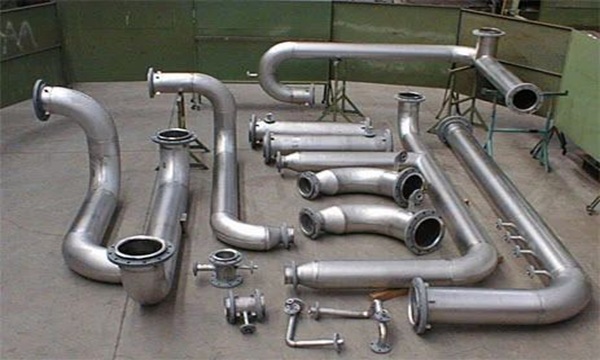
All piping assemblies are fully customizable and are executed in accordance with project drawings, design parameters, and site installation requirements. The standard product configurations are listed as follows:
Straight Pipe Spool with Flanges: Prefabricated flanged spools facilitate rapid field installation and ensure reliable long-term sealing.
Pipe Elbow Assemblies: Our product line includes custom-angle elbows, which are ideal for pipeline routing and direction changes.
Tee Assemblies: Our company is proud to offer integrated tee spools for fluid distribution, merging, and branch connections.
Reducer Assemblies: Concentric and eccentric reducers facilitate a seamless transition in pipe diameter while ensuring stable fluid flow.
Modular Piping Assemblies: We offer pre-integrated units with pipes, fittings, valves, and supports for complex system deployment.
Rubber-Lined Wear-Resistant Piping: Lined spools are engineered for abrasive and corrosive service, ensuring extended service life.
Custom Fabricated Spools: Non-standard piping units are fabricated according to project-specific drawings and operational requirements.
A fabricated pipe assembly is only as reliable as the standards it was built to. Governing standards for industrial prefabricated piping systems include:
ASME B31.3 — Process Piping: the primary code for chemical, petrochemical, and oil and gas process piping.
ASME B31.1 — Power Piping: governs steam and high-energy piping in power generation facilities.
ASME Section IX — Welding and Brazing Qualifications: establishes the qualification framework for welding procedures and welders.
API 570 — Piping Inspection Code: covers inspection, repair, and alteration of in-service piping systems.
ISO 9001 — Quality Management Systems: provides the framework for consistent, documented quality processes in fabrication shops.
CSA Z662 — Oil and Gas Pipeline Systems (Canada): governing standard for pipeline fabrication and installation in Canadian oil and gas applications.
Standard
Description
ASME B31.3
Process Piping Design and Construction
ASME B16.5
Pipe Flanges and Flanged Fittings
ASME B16.9
Factory-Made Wrought Butt-Welding Fittings
ASME B36.10M
Dimensions for Carbon and Alloy Steel Pipe
ASME B36.19M
Dimensions for Stainless Steel Pipe
ASME Section IX
Welding Procedure and Welder Qualification
ASTM A106
Seamless Carbon Steel Pipe for High-Temperature Service
ASTM A312
Austenitic Stainless Steel Pipe
ASTM A234 / ASTM A182
Carbon Steel and Stainless Steel Pipe Fittings and Flanges
Design and planning
1.1 Engineering design
1.2 Planning and organization
Material preparation
2.1 Material procurement
2.2 Material cutting
Pipe fitting processing
3.1 Blanking and prefabrication
3.2 Pipe bending processing
3.3 Flange installation
Welding
4.1 Welding process selection
4.2 Welding operations
Quality Control
5.1 Dimensional inspection
5.2 Appearance inspection
5.3 Stress testing
Surface treatment
6.1 Anti-corrosion treatment
6.2 Insulation treatment
Assembly of prefabricated components
7.1 Component assembly
7.2 Bracket installation
On-site installation
8.1 Transportation and lifting
8.2 On-site connection
8.3 Debugging and acceptance
The choice of welding process in the pipework prefabrication process directly affects weld integrity, production rate, and the long-term reliability of the installed system.
TIG/GTAW (Gas Tungsten Arc Welding) produces clean, high-integrity welds with minimal spatter and excellent fusion. It is the preferred method for root passes on pressure-critical carbon steel pipe, all-position welding on stainless steel, and thin-wall tubing where control of heat input is essential.
MIG/GMAW (Gas Metal Arc Welding) is a process that allows for higher deposition rates when welding carbon steel pipe in higher wall-thickness ranges. When properly implemented, MIG procedures can deliver welds that are code-compliant, which is especially beneficial for projects that require adherence to a schedule.
Submerged Arc Welding (SAW) is well-suited for large-diameter pipe in both the flat and rotated positions, where high deposition rates and deep penetration are advantageous. SAW is a common method for welding long-seam joints in fabricated headers and pressure vessels used in piping systems.
Flux-Core Arc Welding (FCAW) is employed for outdoor-tolerant or position-welding applications on structural piping supports and large-bore carbon steel pipe where productivity is a top priority.